
The Complete Guide to Getting Your Business Found on ChatGPT, Perplexity and Google AI
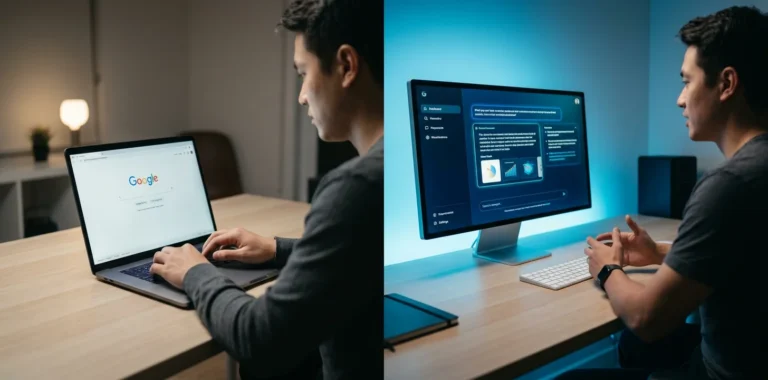
A growing number of your potential customers are no longer typing your business type into Google and scrolling through ten links. They are asking ChatGPT, Perplexity or Google’s AI directly: “what is the best digital marketing agency in Lahore” or “which clinic should I trust for this treatment” and getting a direct, conversational answer with two or three brands named.
If your business is not one of the names that comes up, you are invisible at the exact moment someone is ready to make a decision.
This guide is the practical playbook for how to get found on ChatGPT, Perplexity, Google AI Overviews and the other AI platforms that are rapidly becoming the new front door to your business. No theory, just the specific actions that move the needle.
Why You Need to Get Found on ChatGPT and AI Search Now
Before the tactics, it is worth understanding the scale of what is happening. ChatGPT now processes billions of queries every week, with a significant share functioning as search-style questions rather than creative requests. Google AI Overviews now appear in well over half of all Google searches, often answering the user’s question directly above the organic results.
This means two things for your business. First, fewer people are clicking through to websites at all, because the AI is answering their question for them. Second, the businesses that do get clicked, called or contacted are increasingly the ones that the AI specifically named and recommended in its answer.
Getting found on ChatGPT, Perplexity and Google AI is not a future consideration. It is the current battleground for customer attention, and most businesses have not yet started competing for it.
If you want the deeper theory behind why this matters, read our guides on what Generative Engine Optimization is and the difference between SEO, AEO and GEO. This guide focuses purely on the practical steps.
Step 1: Find Out What AI Is Already Saying About You
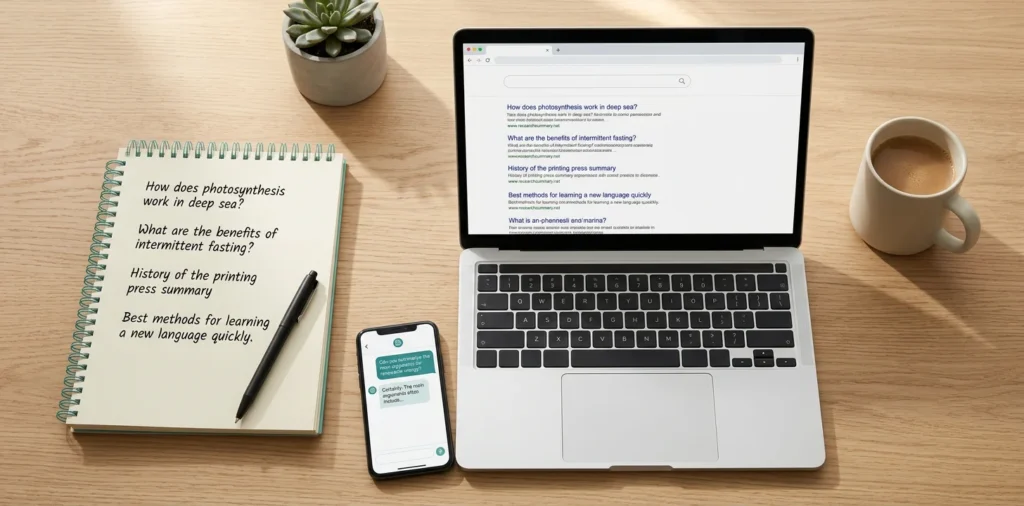
Before changing anything, you need to know your starting point. Open ChatGPT, Perplexity and Google and ask the exact questions your potential customers would ask. Try variations such as “best [your service] in [your city],” “[your service] near me,” and “is [your business name] good.”
Pay close attention to three things. Are you mentioned at all? If you are mentioned, what is the AI saying about you, and is it accurate? And which competitors are being named instead of you, and why might that be.
This audit reveals exactly where you stand and gives you a clear benchmark to track improvement against over the following months as you implement the steps below.
Step 2: Answer Questions Directly in Your Content
AI systems pull from content that answers a question clearly and quickly, not content that buries the answer under three paragraphs of introduction. This is the single most important content change you can make to improve your AI search visibility.
Every page on your website, particularly your service pages and blog content, should answer its core question within the first two to three sentences. If your service page is about web design, the opening should state plainly what web design services you offer and who they are for, not begin with a generic story about your company’s founding.
This same principle applies to blog content. If you are writing about a topic your customers ask questions about, structure the opening paragraph as a direct, complete answer to the most common version of that question. AI systems performing real-time retrieval, such as Perplexity, weight opening content most heavily when deciding what to cite.
Step 3: Build a Comprehensive FAQ Section on Every Key Page
FAQ sections are one of the highest-leverage tactics to get found on ChatGPT and other AI platforms, because they match the exact conversational query format these systems are designed to answer.
Add a genuine FAQ section to every service page, with four to six real questions your customers actually ask, each followed by a clear, complete, standalone answer of two to four sentences. Pair every FAQ section with FAQ Schema structured data, which is a piece of code that explicitly tells search engines and AI crawlers “this is a question and this is its answer,” making your content significantly easier for these systems to extract and cite accurately.
If you need a refresher on exactly how FAQ Schema works and how to implement it, our content marketing team can build this directly into your website.

Step 4: Strengthen Your Entity Presence Across the Web
AI systems do not just evaluate your website in isolation. They build an understanding of your business as an entity based on how consistently and credibly you appear across the entire web, including your Google Business Profile, social media profiles, industry directories, news mentions and review platforms.
To strengthen your visibility in AI-generated answers, make sure your business name, description, services and location are written consistently everywhere they appear online. Inconsistent business names, outdated addresses or conflicting service descriptions across different platforms actively confuse the entity recognition that AI systems rely on.
Claim and fully complete your Google Business Profile, ensure your business is listed accurately on relevant Pakistani business directories, keep your social media bios consistent with your website messaging, and actively encourage genuine customer reviews, since review content is frequently pulled into AI-generated recommendations for local service businesses.
Step 5: Publish Content With Genuine Expertise and Evidence
Generic, surface-level content rarely gets cited by AI systems. Research from Princeton University analysing what makes content more likely to be cited by generative AI found that adding expert quotes increased citation likelihood by approximately 41 percent, adding statistics improved it by around 30 percent, and including citations to credible external sources improved it by a further 30 percent (Source: Princeton GEO Study, referenced via Surmado).
In practical terms, this means every significant piece of content you publish should include real data, named expertise, and references to credible external sources rather than vague generalisations. If you run an agency, quote your own team’s experience with specific client results. If you cite an industry statistic, link to the original source. This evidence-based approach is exactly what signals trustworthiness to AI systems deciding what to cite.
Step 6: Build Topic Clusters Instead of Isolated Pages
AI platforms reward businesses that demonstrate comprehensive depth on a topic rather than a single isolated page. If you want to get found on ChatGPT for a particular service or topic, build a cluster of related content around it, all linking back to a central pillar page.
For example, rather than writing one single blog about digital marketing, build out separate, focused pieces covering SEO, social media marketing, paid advertising, content marketing and website design, each linking back to your core services page and to each other where relevant. This signals genuine topical authority, both to Google’s traditional ranking algorithm and to the AI systems evaluating which sources to trust for a broader subject area.
For more on how this topic cluster approach supports long-term visibility, read our guide on the future of digital marketing in Pakistan.
Step 7: Be Patient, but Start Immediately
Unlike a paid ad campaign that produces results the same day, efforts to get found on ChatGPT and other AI platforms typically take three to six months to show meaningful citation results, broadly similar to traditional SEO timelines. Some platforms, particularly Perplexity which performs real-time retrieval, can begin citing fresh, well-structured content faster than platforms like ChatGPT, which rely more heavily on existing training data and periodic web browsing.
The businesses that begin building genuine AI search visibility now, while most competitors are still unaware this shift is happening, will hold a significant compounding advantage over the next two to three years. The cost of starting today is simply consistent, well-structured content. The cost of waiting is ceding that advantage to competitors who start first.
If you want a full audit of where your business currently stands across ChatGPT, Perplexity and Google AI, get in touch with our team and we will show you exactly where the gaps are and what to fix first.
Frequently Asked Questions
How do I get found on ChatGPT specifically?
To get found on ChatGPT, your business needs to be referenced credibly and consistently across the web, since ChatGPT draws on a combination of its training data and live web browsing. Publishing authoritative, well-structured content with expert quotes and statistics, maintaining a consistent business presence across directories and review platforms, and building genuine topical authority around your services all improve your likelihood of being cited.
Is getting found on ChatGPT the same as ranking on Google?
They overlap significantly but are not identical. Strong traditional SEO and domain authority support your visibility on both, since many AI platforms pull from credible, well-ranking sources. However, AI platforms also weigh factors such as content structure, FAQ formatting, expert quotes and consistent entity presence more heavily than traditional Google ranking factors alone.
How long does it take to get found on ChatGPT and other AI platforms?
Most businesses see meaningful improvement in AI citation within three to six months of consistent effort, similar to traditional SEO timelines. Platforms like Perplexity that perform real-time web retrieval may begin citing fresh, well-structured content somewhat faster than platforms relying more heavily on periodic training data updates.
Does my business need a large content budget to get found on ChatGPT?
No. The core actions, restructuring existing content to answer questions directly, adding genuine FAQ sections, ensuring consistent business information across the web, and publishing a small number of evidence-based, expert-led articles, are achievable for businesses of any size. Consistency and content quality matter more than budget size.
Can a small local business get found on ChatGPT and Google AI?
Yes. In fact, local businesses with a clear, consistent online presence and genuinely useful content often have a real advantage, since they face less competition for AI citation than large national or international brands competing for the same broad queries.